CLASSIQUES
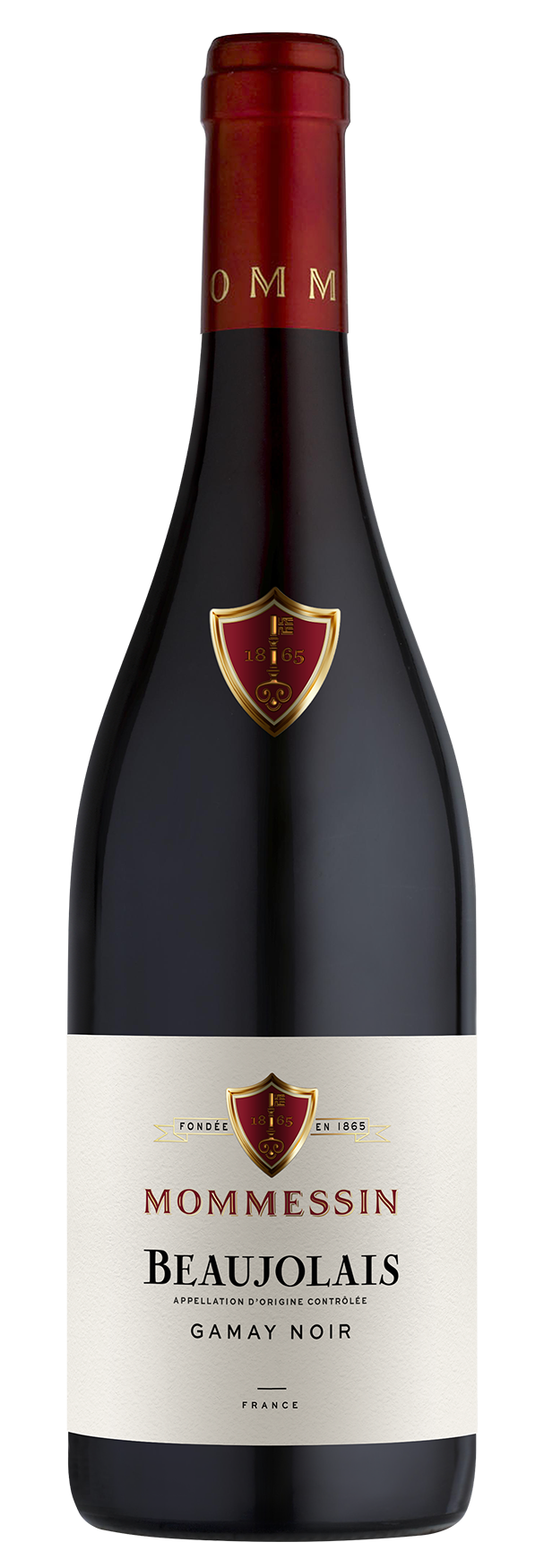
BEAUJOLAIS 2025
Grape varietal
Black Gamay (Gamay Noir) with white juice.
Tasting notes
Colour: Elegant ruby red with purple reflections.
Nose: A fresh and fruity bouquet wine with aromas of small red fruits (strawberry).
Palate: A fruity and lively taste, round and supple in the mouth, with good balance and smoothness.
Serving suggestions
It should be served between 11 and 13°C. (52-55°F.)
Food and wine pairing
A pleasant, friendly wine, to be appreciated at any time of the day, with picnics, before meals, or with cold meats and starters.
Ageing potential
Beaujolais is a highly aromatic wine that could be drunk to enjoy its fruity bouquet. Best between one to 3 years.
Terroir
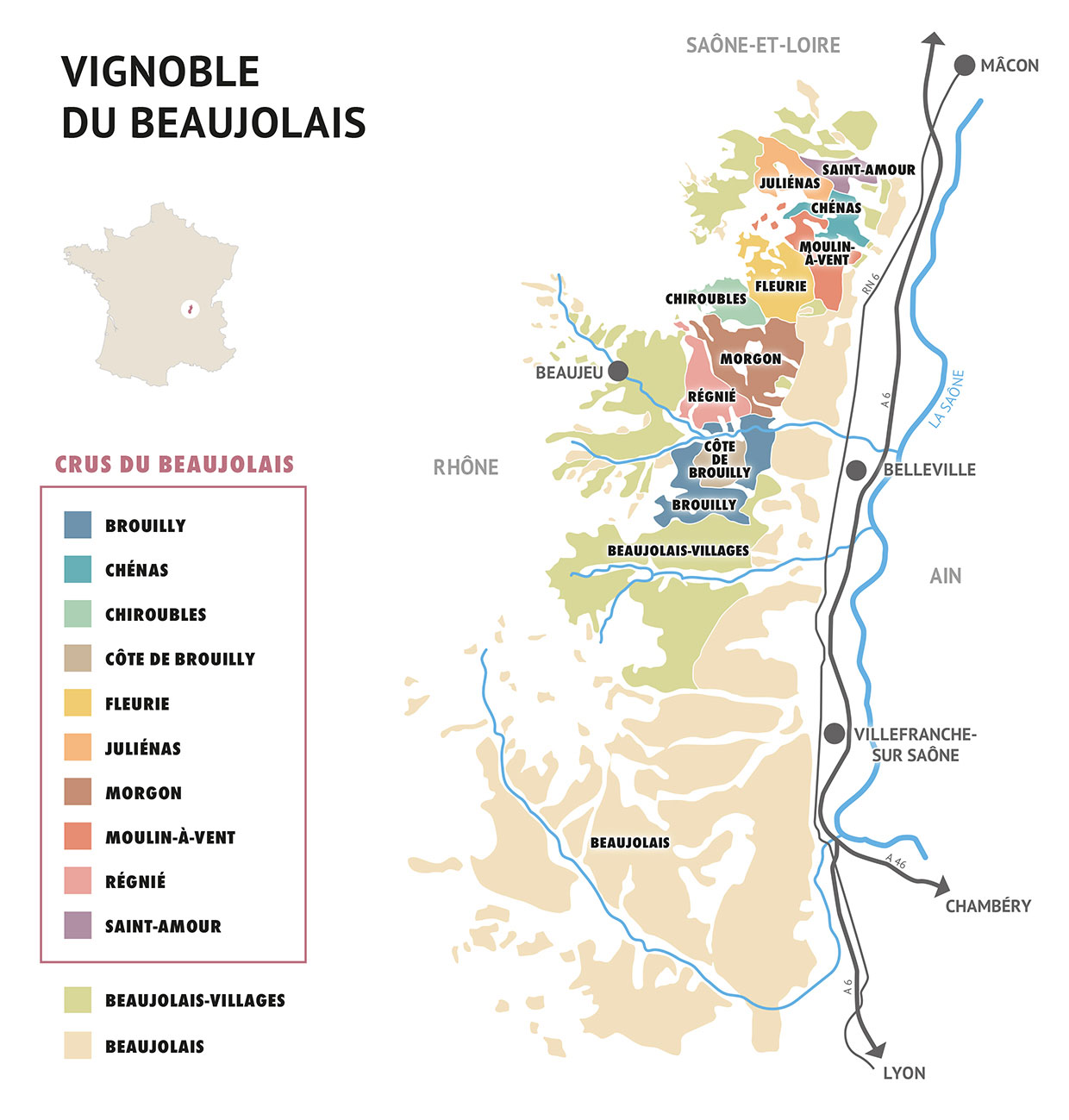
Beaujolais A.O.C wines are mainly produced in the south of Villefranche-sur-Saône. The vineyard spreads over 9 700 hectares. It is the most important production area representing 50% of the total production. Only one variety of vine is used in the Beaujolais vineyard : black gamay with white juice which produces red wine. The region also has the highest density of plantations (between 9 000 and 13 000 vines per hectare) which, together with a strict trimming of the vines (12 buds max.), limits the yield. The Beaujolais wine making method is unique and combines ancestral method with modern technique.
Soils made of chalky clay and granite. Average age of vines : 40 years.
Vinification and maturing
Manual harvests. Traditional semi-carbonic Beaujolais vinification during 12 to 15 days to ensure good extraction, with temperatures held at 22-25°C (71-77°F) to protect the fruit of the Gamay grape. Ageing in vats.
Vintage : 2025
In the Beaujolais area, the 2025 vintage stands out for its remarkable precocity, in line with great sunny years such as 2015 and 2018.
After a fairly cool winter and a balanced spring, budbreak occurred as early as April 6, followed by a rapid flowering at the end of May, eight days ahead of 2024.
Early summer was marked by contrasts: heavy rainfall in early June, locally accompanied by hail, was followed by a sharp rise in temperatures. A more moderate July preceded a heatwave in August, with peaks above 40°C. (104° F.), leading to significant water stress. These conditions accelerated ripening, enhanced berry concentration and kept disease pressure extremely low.
Harvest began on August 23 for Chardonnay and August 25 for Gamay, extending until September 16 depending on the area. Despite reduced volumes due to hail and drought, quality is definitely there: concentrated, complex wines with deep color and solid tannic structure. A truly nice vintage in the making.