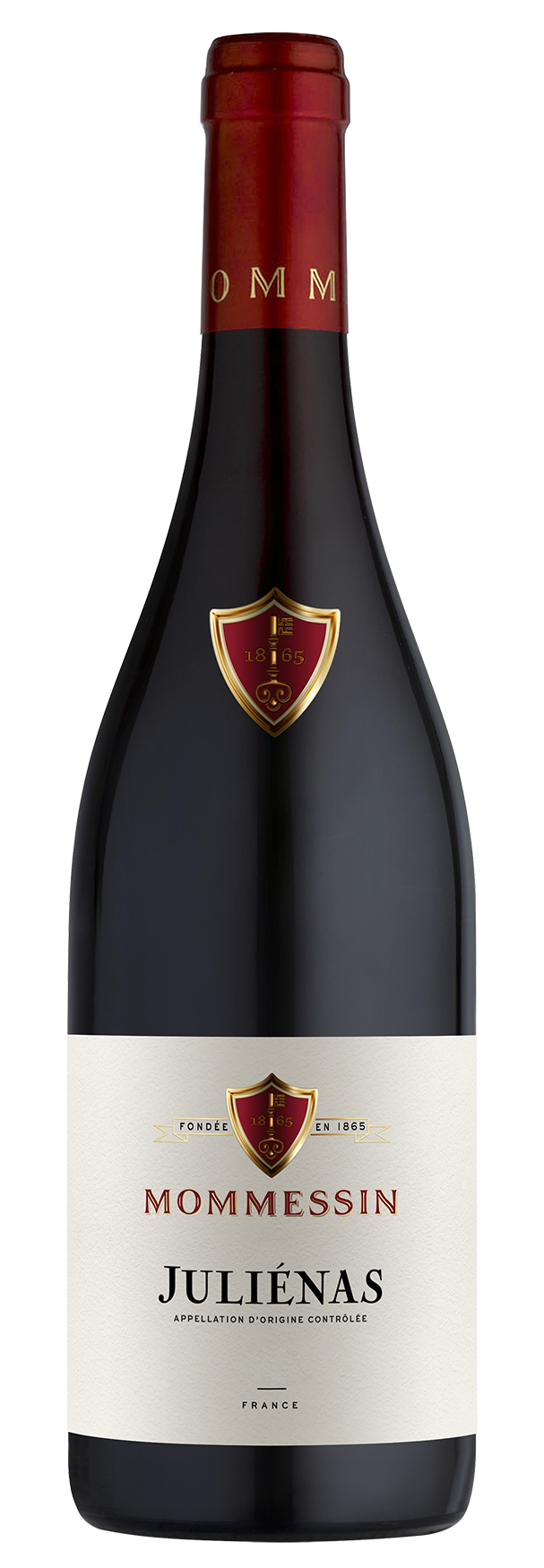
JULIÉNAS 2025
Grape varietal
Black Gamay (with white juice).
Tasting notes
Colour: deep and intense ruby dress.
Nose: generous bouquet of flowers (peony...) and fruits (redcurrant, raspberry, wild strawberry).
Palate: It is a structured and balanced wine with a nice length on the palate.
Serving suggestions
Serve ideally at a temperature situated between 12 and 15°C. (53-59°F.).
Food and wine pairing
An elegant companion to meals, such as a great steak, fine pork and obviously the “Coq au vin” of Juliénas.
Ageing potential
Ready to drink but might be kept until 3 to 5 years.
Terroir
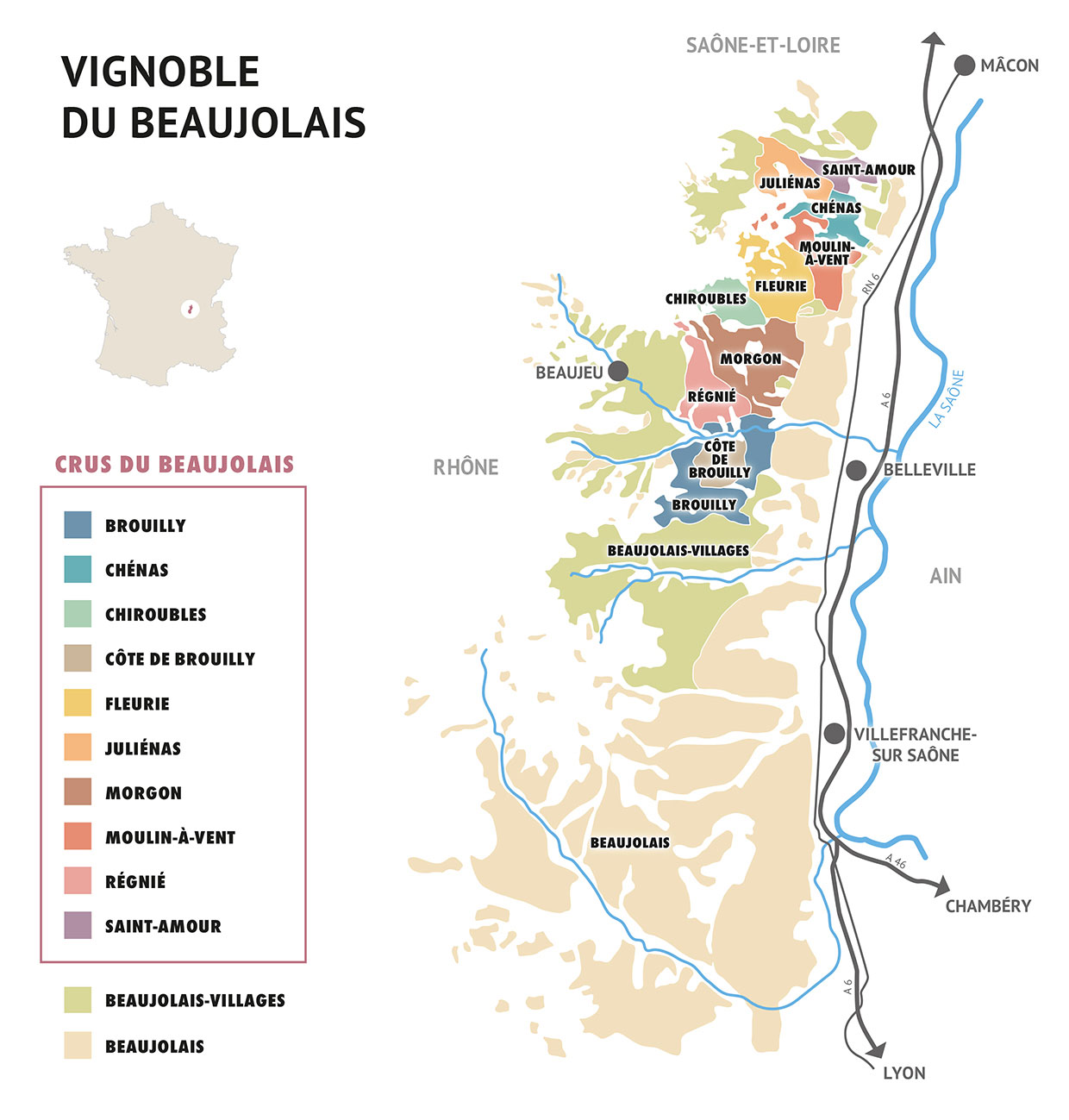
Juliénas, which according to etymology, takes its name from Julius Caesar, is located at the northern gateway to the Beaujolais Vineyard, at the crossroads of two kingdoms: the ending of Gamay and the emerging of Chardonnay.
The Juliénas terroir is made up to the west of lean and arid granite soils, infiltrated with veins of manganese and porphyries which, towards the east, give way to formations of the secondary era, ancient alluvium, deeper soils and more clayey.
Vinification and maturing
Harvest: manual.
Wine making: the harvest, on the arrival at the cuverie is handled in different ways, with grape-bunches with the lowest yields being de-stemmed. That allows for longer macerations with the extraction of gentle tannins, giving better complexity.
Ageing: in vats.
Vintage : 2025
In the Beaujolais area, the 2025 vintage stands out for its remarkable precocity, in line with great sunny years such as 2015 and 2018.
After a fairly cool winter and a balanced spring, budbreak occurred as early as April 6, followed by a rapid flowering at the end of May, eight days ahead of 2024.
Early summer was marked by contrasts: heavy rainfall in early June, locally accompanied by hail, was followed by a sharp rise in temperatures. A more moderate July preceded a heatwave in August, with peaks above 40°C. (104° F.), leading to significant water stress. These conditions accelerated ripening, enhanced berry concentration and kept disease pressure extremely low.
Harvest began on August 23 for Chardonnay and August 25 for Gamay, extending until September 16 depending on the area. Despite reduced volumes due to hail and drought, quality is definitely there: concentrated, complex wines with deep color and solid tannic structure. A truly nice vintage in the making.