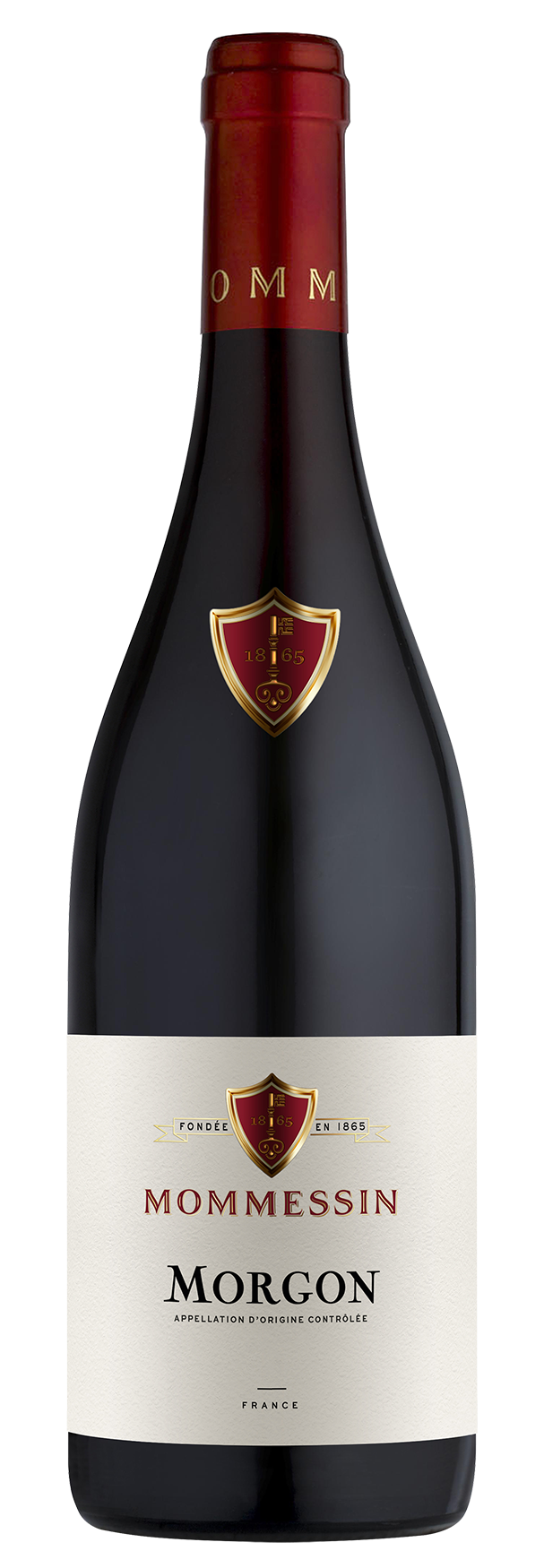
MORGON 2024
Grape varietal
Black Gamay (Gamay Noir) with white juice.
Tasting notes
Colour: A beautiful deep ruby-red colour.
Nose: Intense and complex, revealing characteristic aromas of stone fruits such as morello cherry and apricot.
Palate: Rich and well-structured, with supple tannins that give the wine its renowned ability to develop "Morgon character" with age. Powerful red fruit notes, particularly morello cherry, linger throughout the palate.
Serving suggestions
Best served between 15°C and 18°C (59°F to 64°F).
Food and wine pairing
An excellent accompaniment to starters, white meats and charcuterie, as well as game dishes and cheeses.
Ageing potential
A cru that can be enjoyed in its youth but benefits from cellaring for 2 to 5 years.
Origins
The presence of vineyards in Morgon can be traced back to the end of the 10th century. A deed dated 956 records the sale of a vineyard by the Lord of Beaujeu to one of his vassals.
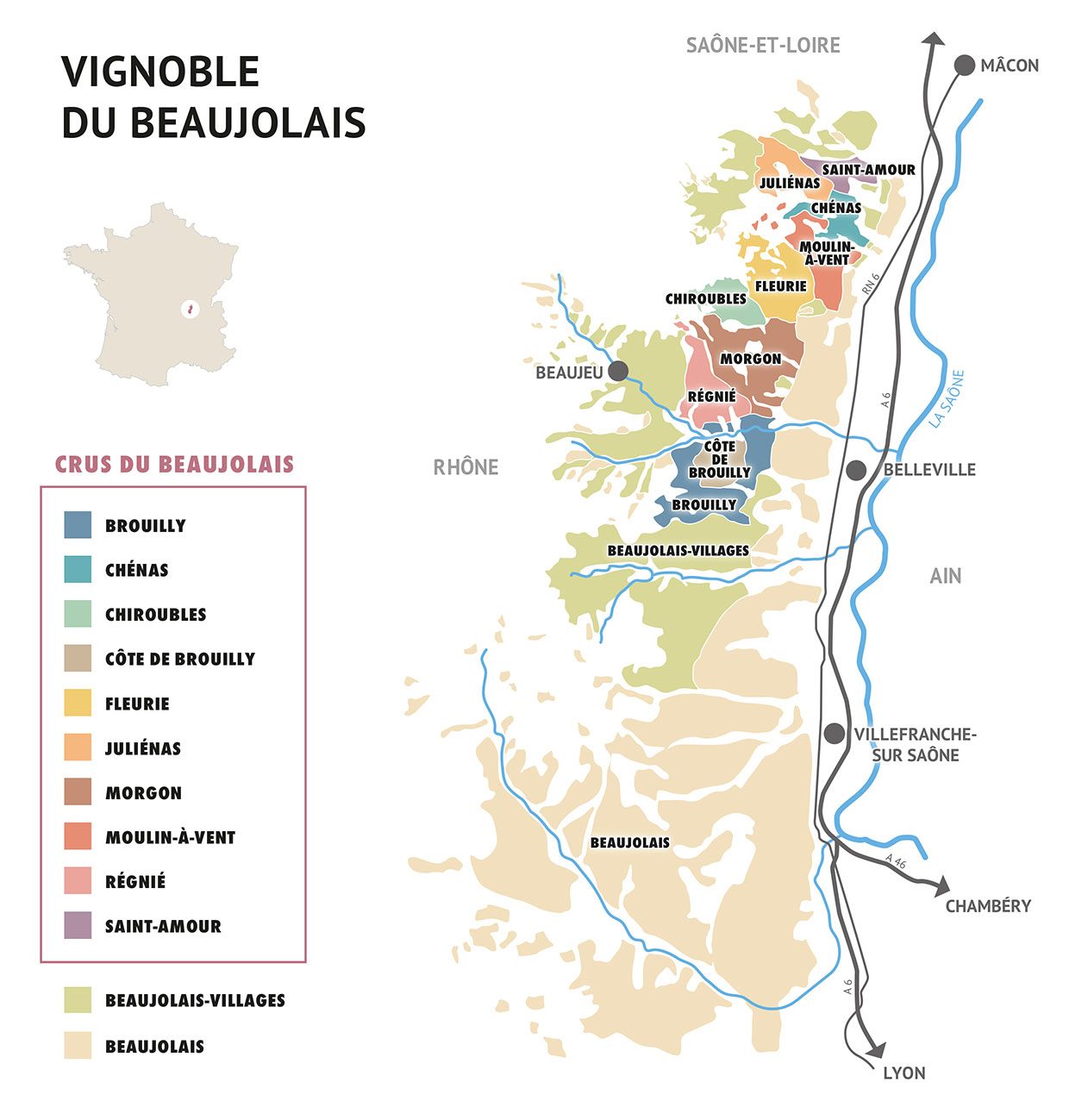
At the heart of the Beaujolais Crus region, the Morgon appellation area is, after Brouilly, the second largest in the vineyard.
Terroir
Formed through the weathering of friable crystalline rocks, primarily pyritic schists rich in iron oxides and traces of manganese, the soil consists of rocks at varying stages of decomposition and therefore contains varying proportions of clay.
The material known locally as "roche pourrie" or "morgon" is an advanced stage of weathering of ancient schists and very old blue-green igneous rocks.
Vinification and maturing
Harvesting: Hand-picked.
Vinification: Traditional Beaujolais semi-carbonic maceration.
Ageing: In tank.
Vintage : 2024
The winter of 2023-2024 was the 3rd warmest since 1900, with a particularly mild February. Spring was marked by heavy rainfall, with a notable lack of sunshine. Despite these conditions, temperatures remained above normal. Summer alternated between hot and cool spells, with hot spells in July. These climatic variations complicated plant health management in the vineyards, but winegrowers were able to keep the situation under control.
Yields for the 2024 harvest are expected to be low and very heterogeneous, with some plots suffering from coulure and millerandage. The first pruning began in early September. Harvesting was spread over three weeks, finishing at the end of September in the latest-ripening areas.
The reds have notes of raspberry, black cherry, pear and floral scents such as lily of the valley. Initial tastings reveal fruity, elegant, supple wines with a ruby colour. The range of aromas is broad, giving an impression of deliciousness on the palate, with a lovely freshness and pleasant complexity.