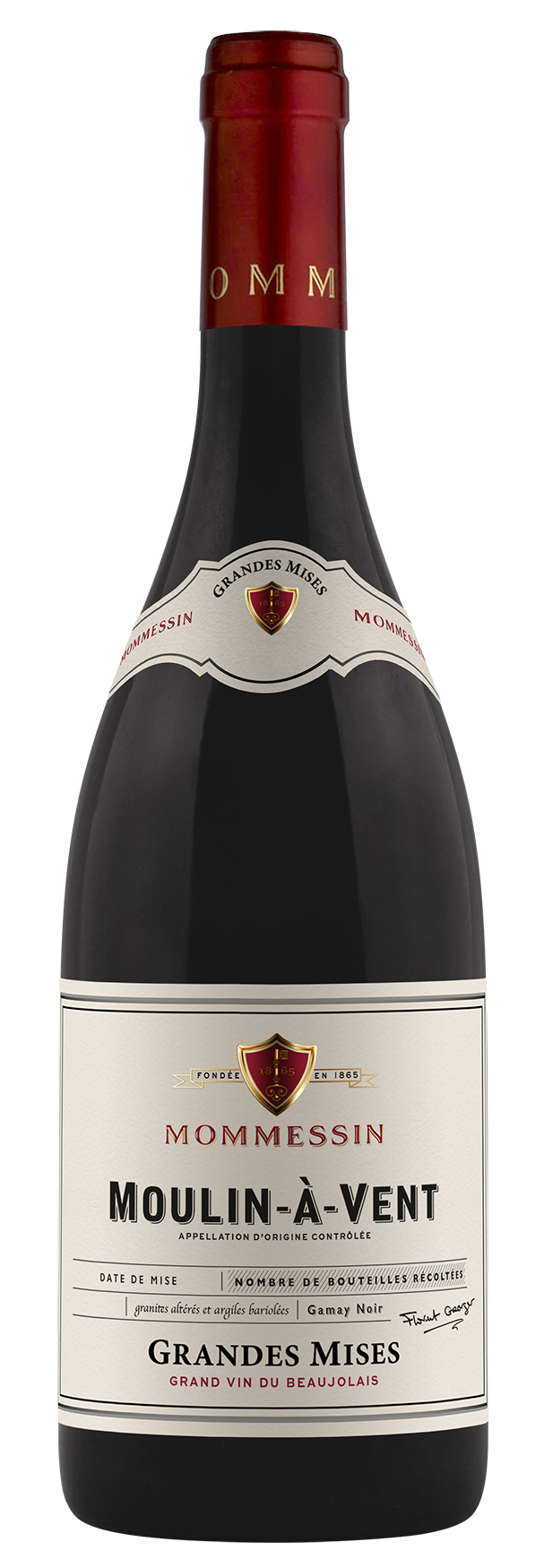
GRANDES MISES
MOULIN-À-VENT 2023
Grape varietal
Gamay Noir with with juice.
Tasting notes
An attractive colour displaying a ruby hue with violet highlights.
A clean, expressive nose with well-integrated oaky notes, followed by mineral nuances, black fruit, floral and spicy notes.
A wine with silky tannins, revealing a fine structure and a long, persistent finish.
Serving suggestions
Best decanted and served at a temperature of 14° to 16°C. (57-60°F.) to discover the aromatic intensity of this wine.
Food and wine pairing
It is perfect with red meats, grilled, roasted or even marinated and strong cheeses.
Ageing potential
This wine can be kept for more than 5 years.
Origins
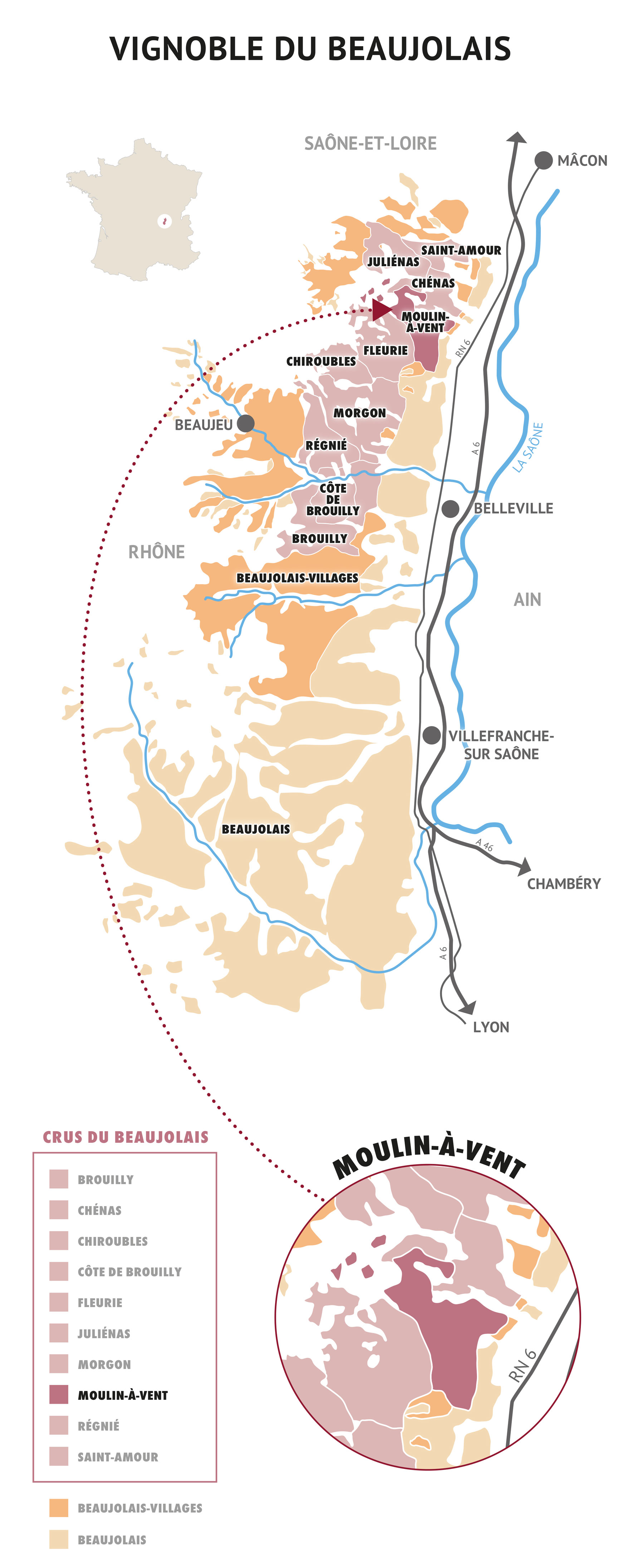
The appellation gets its name from the presence of an old windmill situated in the middle of the vineyard, which was used to mill grain until the mid 19th Century. The Moulin-A-Vent appellation stretches over the communes of Romaneche-Thorins and Chenas.
Terroir
The soil of Moulin-A-Vent is fairly shallow, permeable and rich in mineral elements especially manganese. Composed of pink-coloured brittle granite.
Vine and soil
From a rigorous selection of a single domaine sourcing. The vineyard benefits from all exposures except the North.
Age of vines: 54 years
Yield: 50hectolitres / hectare
The vines are pruned “en gobelet” and "in cordon" with sustainable farming methods.
The shallow, pink-brown soil is sandy and not very clayey, but clearly acidic, on variegated clays beyond 105 cm, then pebbles, then weathered granite.
Vinification and maturing
The Gamay grapes were harvested in early September 2023.
The harvest was 100% destemmed and transferred by gravity into concrete tanks.
Maceration lasted 20 days, with pump-overs and rack-and-return, followed by punch-downs prior to pressing, in order to extract maximum structure and colour from the vintage.
The wine was then aged on fine lees in barrels for 13 months.
Vintage : 2023
In 2023, the Beaujolais Gamay harvest was marked by contrasting weather conditions. A rainy spring was followed by a hot, dry summer, favouring rapid, even ripening of the grapes. These conditions helped to concentrate sugars and aromas while maintaining good acidity. Yields were slightly below average due to the summer drought, but the quality of the grapes was exceptional.
Harvesting began in early September, with healthy, ripe bunches of grapes. We were able to harvest high quality grapes, despite some losses due to the drought. Overall, the state of the harvest was excellent, with grapes of good colour and thick skins, a sign of optimum ripeness.
The quality of the wines promises to be excellent, with intense aromas of red and black fruit, floral notes and spicy nuances. Initial tasting notes reveal well-balanced, well-structured wines with lively acidity and silky tannins. Their freshness and complexity promise a long life in bottle.
Awards
- June 2026 : 90 pts - Silver Medal - DECANTER World Wine Awards