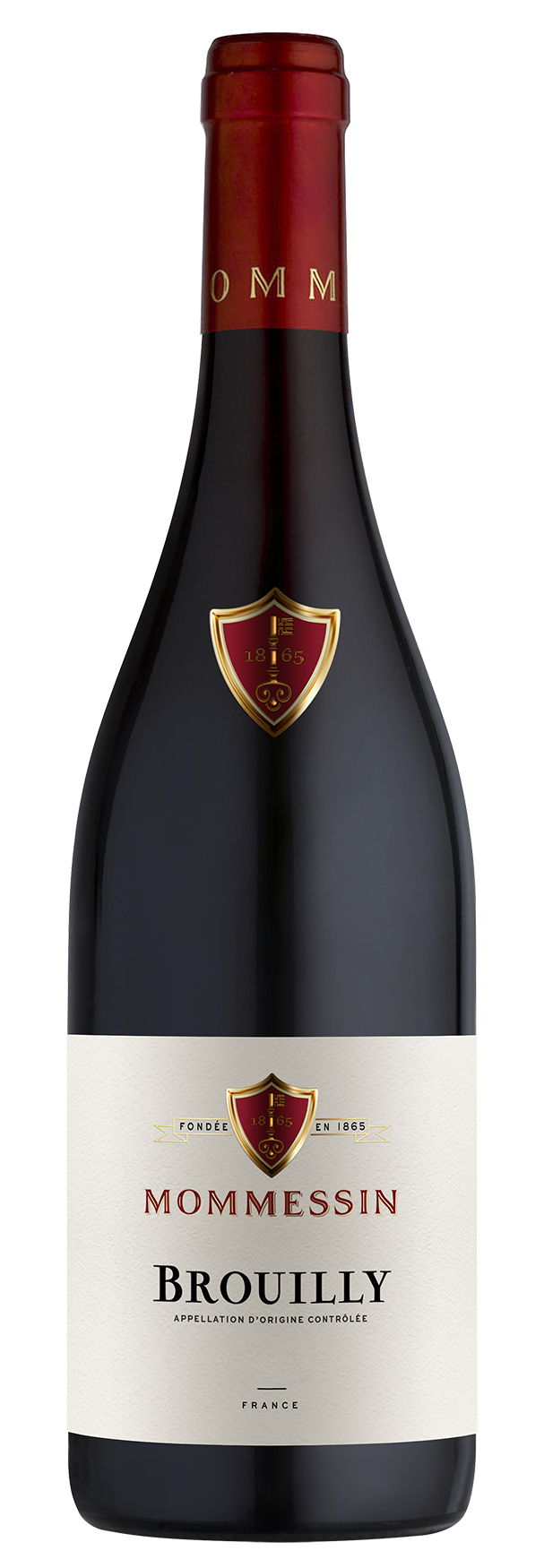
BROUILLY 2024
Grape varietal
Black Gamay (with white juice).
Tasting notes
Colour: red ruby colour.
Nose: aromas of red and black fruits with scents of iris and violet.
Palate: a good structure with very great finesse. Silky wine with soft tannins and persistence on the palate.>
Serving suggestions
Serve idelly at a temperature of 15 to 18°C. (59-64°F.).
Food and wine pairing
It is an excellent companion to light meats, chicken, cooked pork meats and jugged rabbit.
Ageing potential
Ready to drink, but can be kept 2 to 3 years.
Origins
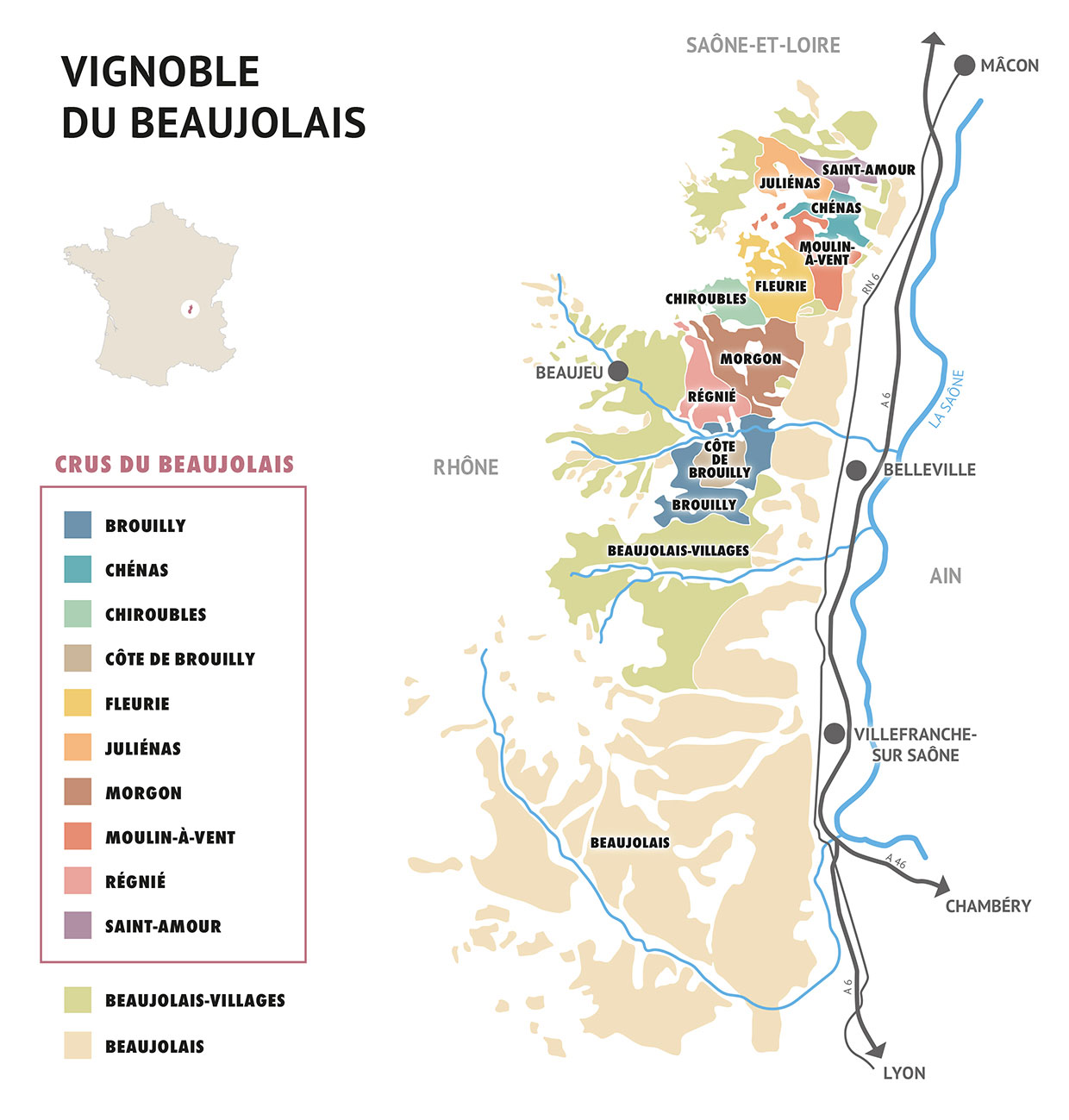
As in the rest of Burgundy and Beaujolais, the name of a wine is nearly always that of a place: a general region, village, or specific vineyard within the village. The Brouilly cru is the largest of all the Beaujolais crus, coming from the central part of the region, quite precisely from the village of Saint Lager. It lies at the foot of the hill of the mont Brouilly. It is a very old vineyard which was once cultivates by the Romans.
Terroir
The soil is very diverse, from granite to alluvial loams neighbouring the Saône river plain. The blue stone of Brouilly is the hardest in Europe.
Vinification and maturing
Vintage : 2024
The winter of 2023-2024 was the 3rd warmest since 1900, with a particularly mild February. Spring was marked by heavy rainfall, with a notable lack of sunshine. Despite these conditions, temperatures remained above normal. Summer alternated between hot and cool spells, with hot spells in July. These climatic variations complicated plant health management in the vineyards, but winegrowers were able to keep the situation under control. Yields for the 2024 harvest are expected to be low and very heterogeneous, with some plots suffering from coulure and millerandage. The first pruning began in early September. Harvesting was spread over three weeks, finishing at the end of September in the latest-ripening areas. The reds have notes of raspberry, black cherry, pear and floral scents such as lily of the valley. Initial tastings reveal fruity, elegant, supple wines with a ruby colour. The range of aromas is broad, giving an impression of deliciousness on the palate, with a lovely freshness and pleasant complexity. The white wines are remarkably fresh and elegant. Their bouquet offers citrus notes, enhanced by subtle floral touches and aromas of pear and peach. The wine is structured by a pronounced minerality, with a lively, unctuous texture.