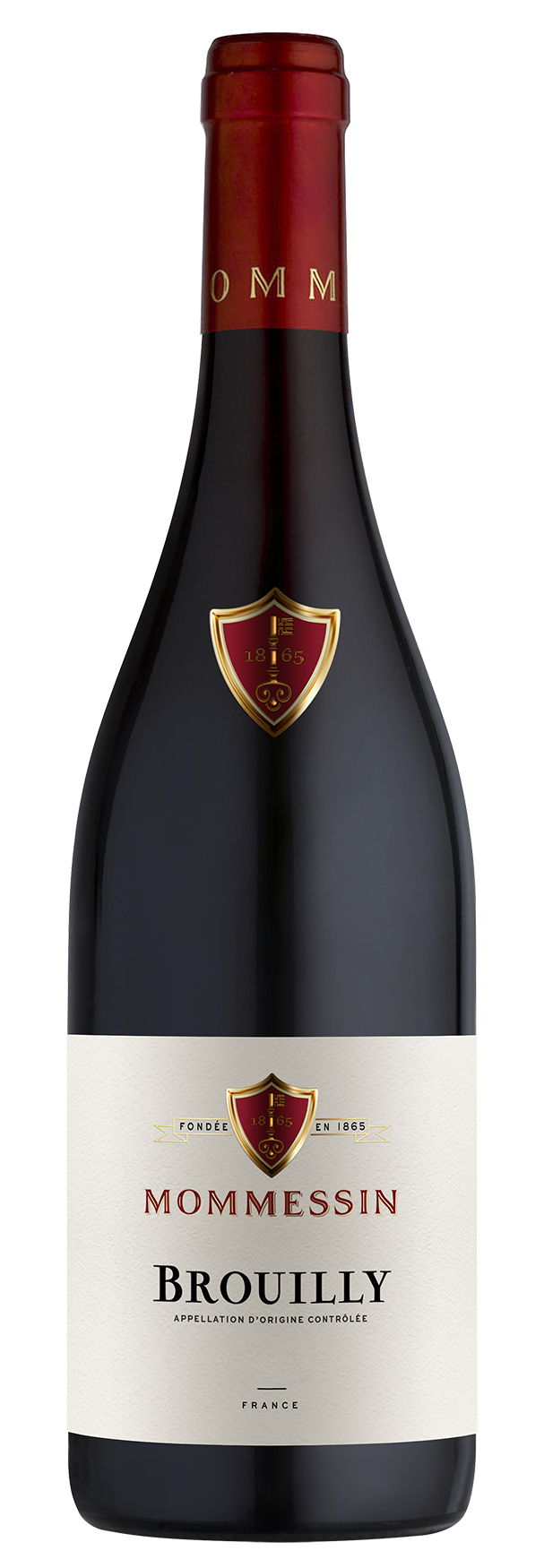
BROUILLY 2025
Grape varietal
Black Gamay (with white juice).
Tasting notes
Colour: red ruby colour.
Nose: aromas of red and black fruits with scents of iris and violet.
Palate: a good structure with very great finesse. Silky wine with soft tannins and persistence on the palate.>
Serving suggestions
Serve idelly at a temperature of 15 to 18°C. (59-64°F.).
Food and wine pairing
It is an excellent companion to light meats, chicken, cooked pork meats and jugged rabbit.
Ageing potential
Ready to drink, but can be kept 2 to 3 years.
Origins
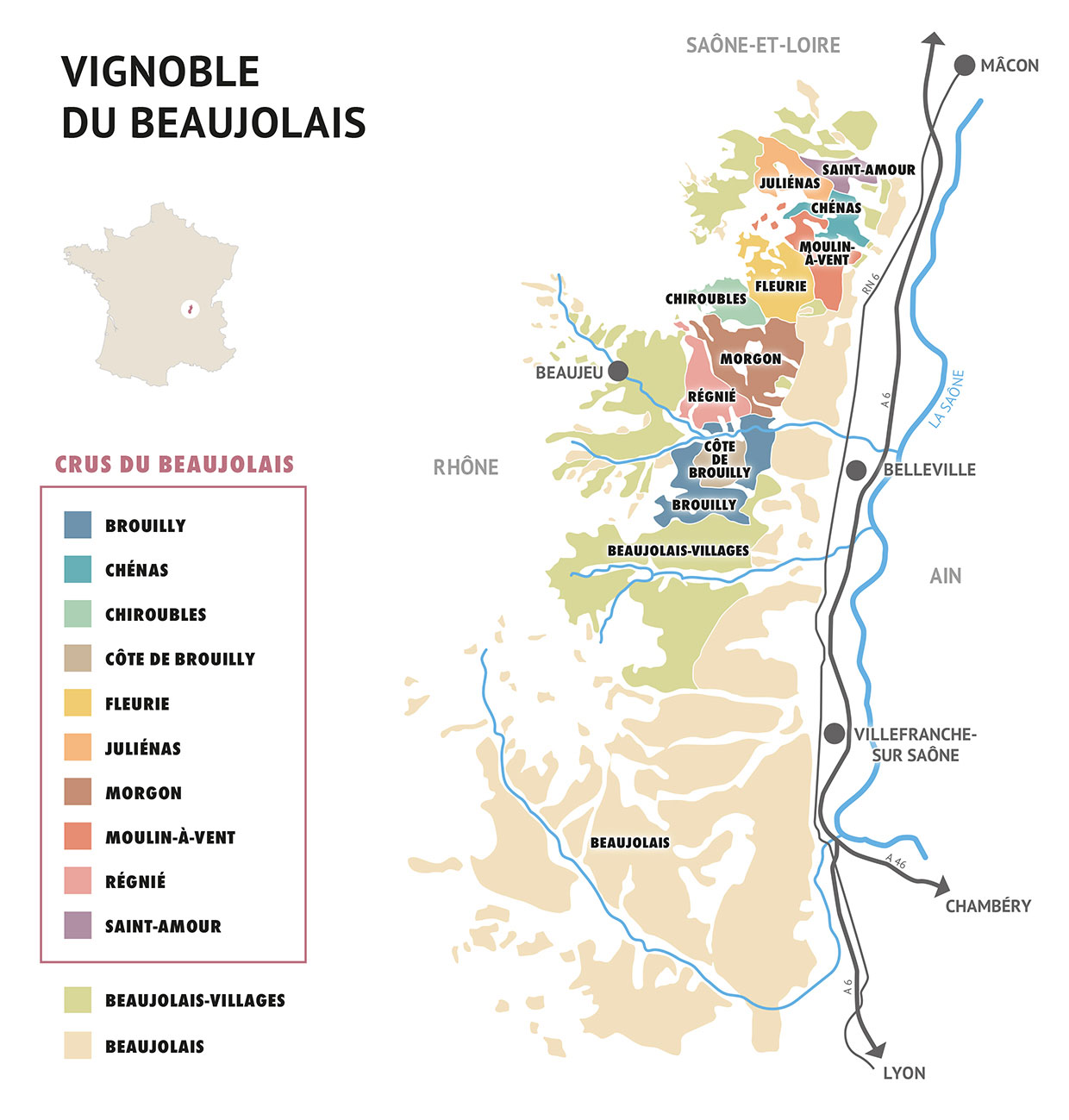
As in the rest of Burgundy and Beaujolais, the name of a wine is nearly always that of a place: a general region, village, or specific vineyard within the village. The Brouilly cru is the largest of all the Beaujolais crus, coming from the central part of the region, quite precisely from the village of Saint Lager. It lies at the foot of the hill of the mont Brouilly. It is a very old vineyard which was once cultivates by the Romans.
Terroir
The soil is very diverse, from granite to alluvial loams neighbouring the Saône river plain. The blue stone of Brouilly is the hardest in Europe.
Vinification and maturing
Vintage : 2025
In the Beaujolais area, the 2025 vintage stands out for its remarkable precocity, in line with great sunny years such as 2015 and 2018.
After a fairly cool winter and a balanced spring, budbreak occurred as early as April 6, followed by a rapid flowering at the end of May, eight days ahead of 2024.
Early summer was marked by contrasts: heavy rainfall in early June, locally accompanied by hail, was followed by a sharp rise in temperatures. A more moderate July preceded a heatwave in August, with peaks above 40°C. (104° F.), leading to significant water stress. These conditions accelerated ripening, enhanced berry concentration and kept disease pressure extremely low.
Harvest began on August 23 for Chardonnay and August 25 for Gamay, extending until September 16 depending on the area. Despite reduced volumes due to hail and drought, quality is definitely there: concentrated, complex wines with deep color and solid tannic structure. A truly nice vintage in the making.