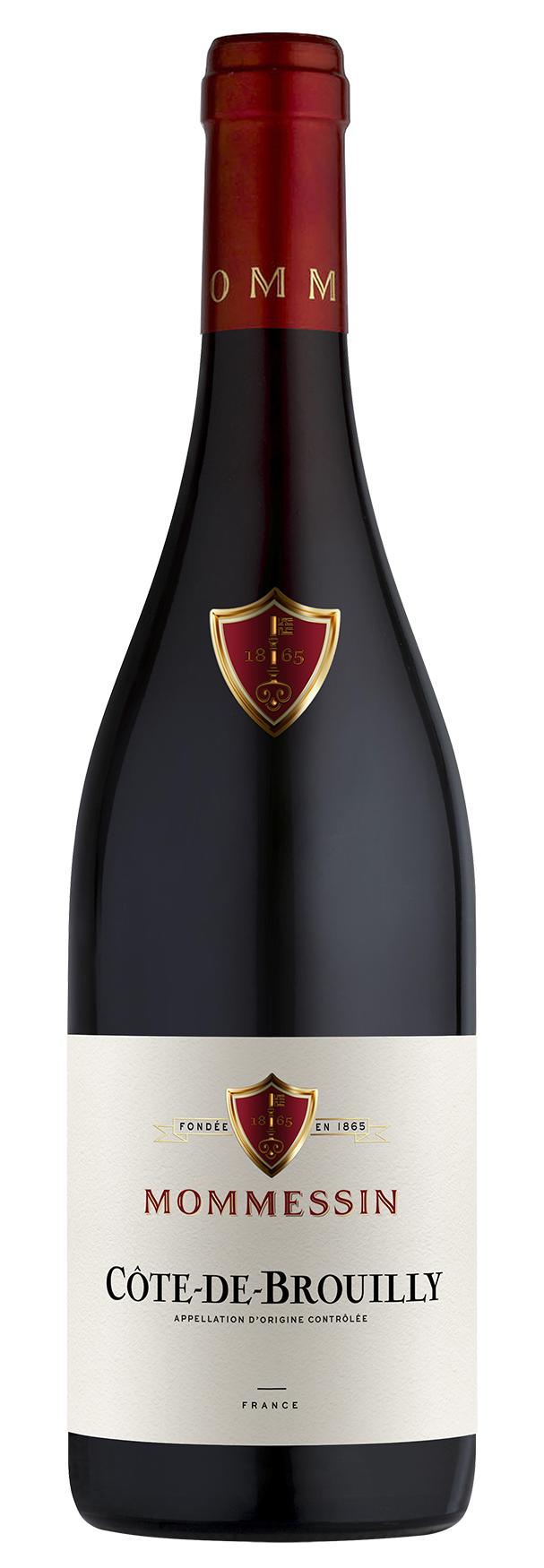
COTE DE BROUILLY 2024
Grape varietal
Black Gamay (Gamay Noir) with white juice.
Tasting notes
Colour: Beautiful deep purple colour.
Nose: Fruity, with aromas of red berries (cherry, strawberry and blueberry) and iris.
Palate: Elegant, full-bodied and well-balanced wine with excellent breadth and persistence on the palate.
Serving suggestions
Serve ideally between 15°C and 18°C (59°F-64°F).
Food and wine pairing
An excellent match for a charcuterie platter, grilled meats or rabbit stew.
Ageing potential
This wine benefits from bottle ageing before revealing its full elegance on the palate and can be cellared for 2 to 3 years.
Origins
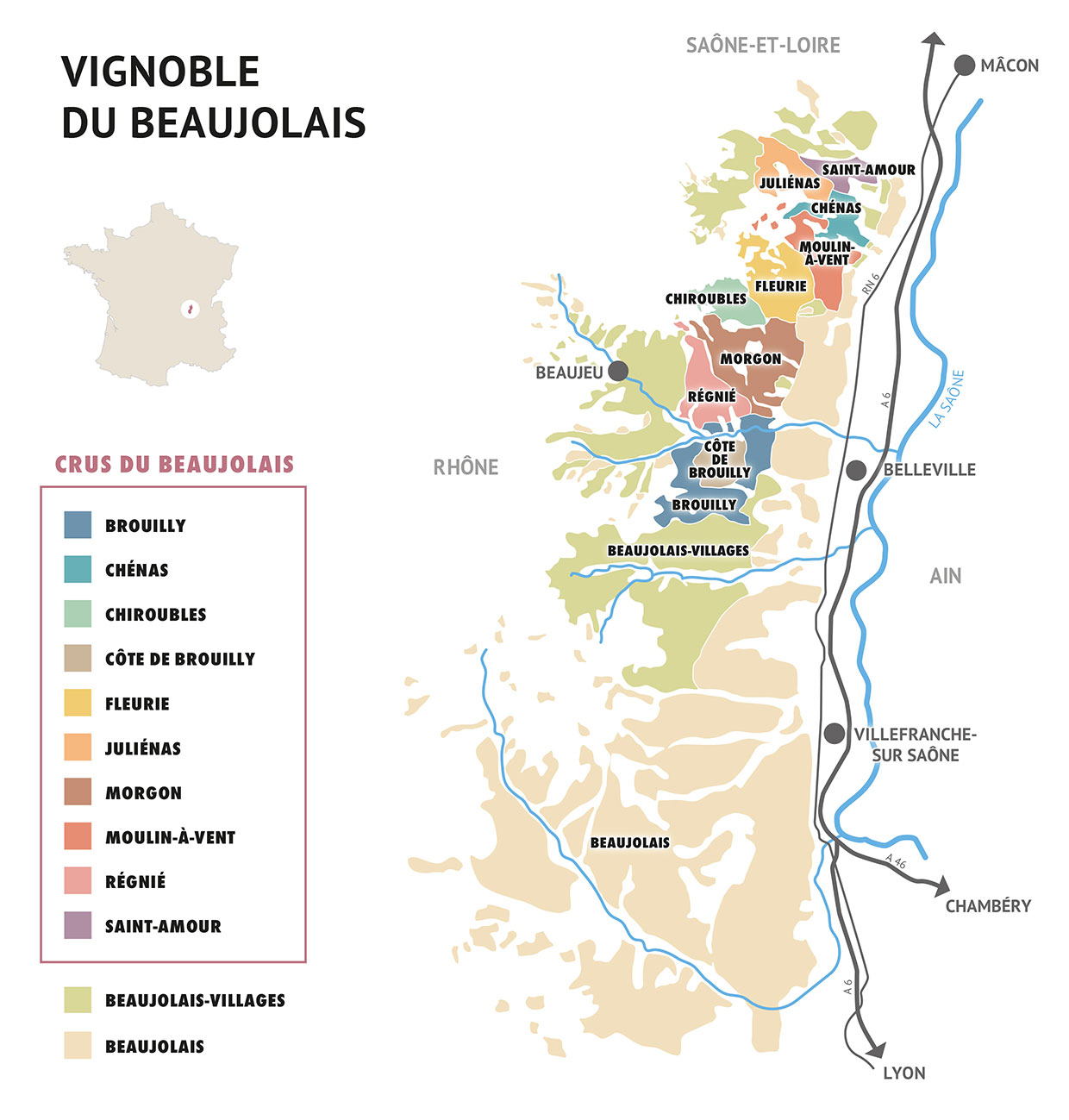
The Côte-de-Brouilly appellation was established in 1934. The owners of the Brouilly hill sought to preserve the distinctive identity of their wines amid the expansion of the Brouilly appellation boundaries, as Côte-de-Brouilly wines are traditionally richer and more structured than Brouilly wines.
Terroir
The vineyard, located entirely on the steep slopes of Brouilly hill, is rooted in very hard blue-green granite and schist soils known as “cornes vertes” or diorite. Mont Brouilly is believed to be a remnant of the region’s ancient volcanic activity, making it one of the most emblematic terroirs of Beaujolais.
Vinification and maturing
Hand-harvested grapes.
Gravity-fed filling into concrete vats. Whole-cluster maceration for approximately ten days, including pump-overs and rack-and-return operations prior to pressing, to maximise structure and colour extraction.
The wine is then aged on fine lees in tank.
Vintage : 2024
The winter of 2023-2024 was the 3rd warmest since 1900, with a particularly mild February. Spring was marked by heavy rainfall, with a notable lack of sunshine. Despite these conditions, temperatures remained above normal. Summer alternated between hot and cool spells, with hot spells in July. These climatic variations complicated plant health management in the vineyards, but winegrowers were able to keep the situation under control.
Yields for the 2024 harvest are expected to be low and very heterogeneous, with some plots suffering from coulure and millerandage. The first pruning began in early September. Harvesting was spread over three weeks, finishing at the end of September in the latest-ripening areas.
The reds have notes of raspberry, black cherry, pear and floral scents such as lily of the valley. Initial tastings reveal fruity, elegant, supple wines with a ruby colour. The range of aromas is broad, giving an impression of deliciousness on the palate, with a lovely freshness and pleasant complexity.