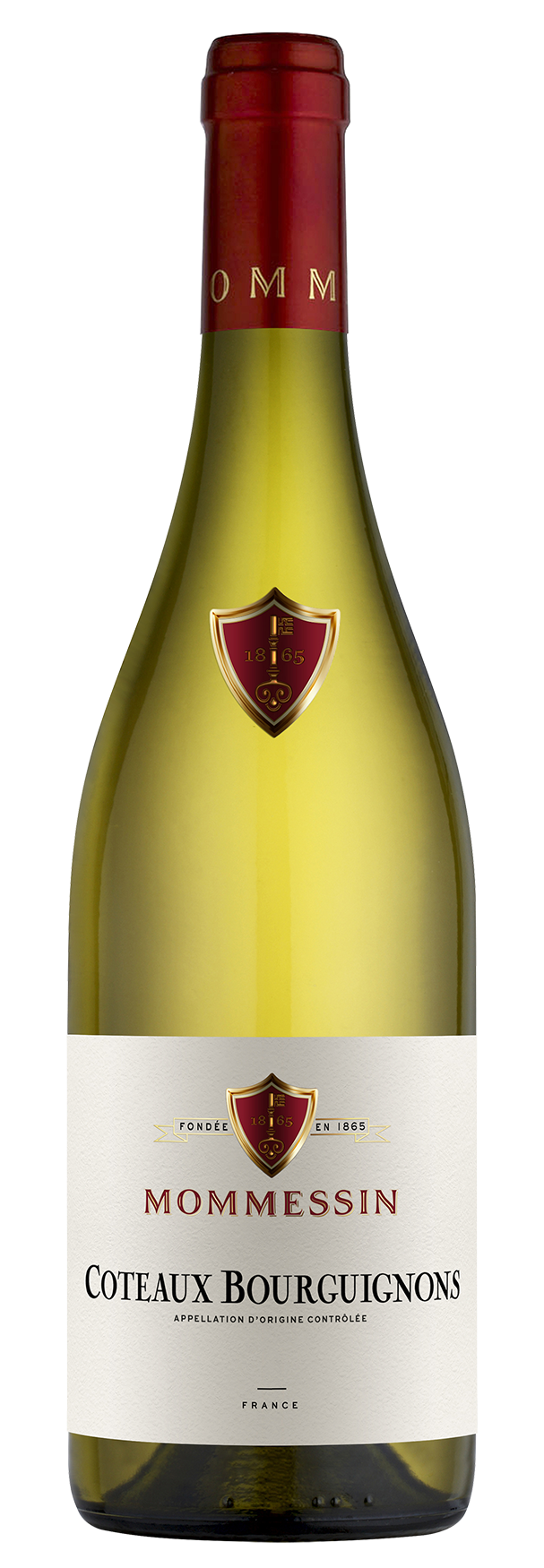
COTEAUX BOURGUIGNONS 2025
Grape varietal
Chardonnay.
Tasting notes
Colour: Pale gold with silver reflections.
Nose: Very pure and with a complexity of fruit aromas (peach, melon, grapefruit), light oak, coffee & vanilla nuances and hints of nuts – almonds and coconut.
Palate: Well-balanced with a combination of citrus, light oak and white flowers. A little touch of minerality on the finish reminds us that is a Chardonnay from Burgundy.
Serving suggestions
Serve ideally at a temperature of 12°C. (54°F.).
Food and wine pairing
Ideal with charcuterie, white meats, fish and cheeses.
Ageing potential
Ready to drink now, can be kept 2-3 years.
Terroir
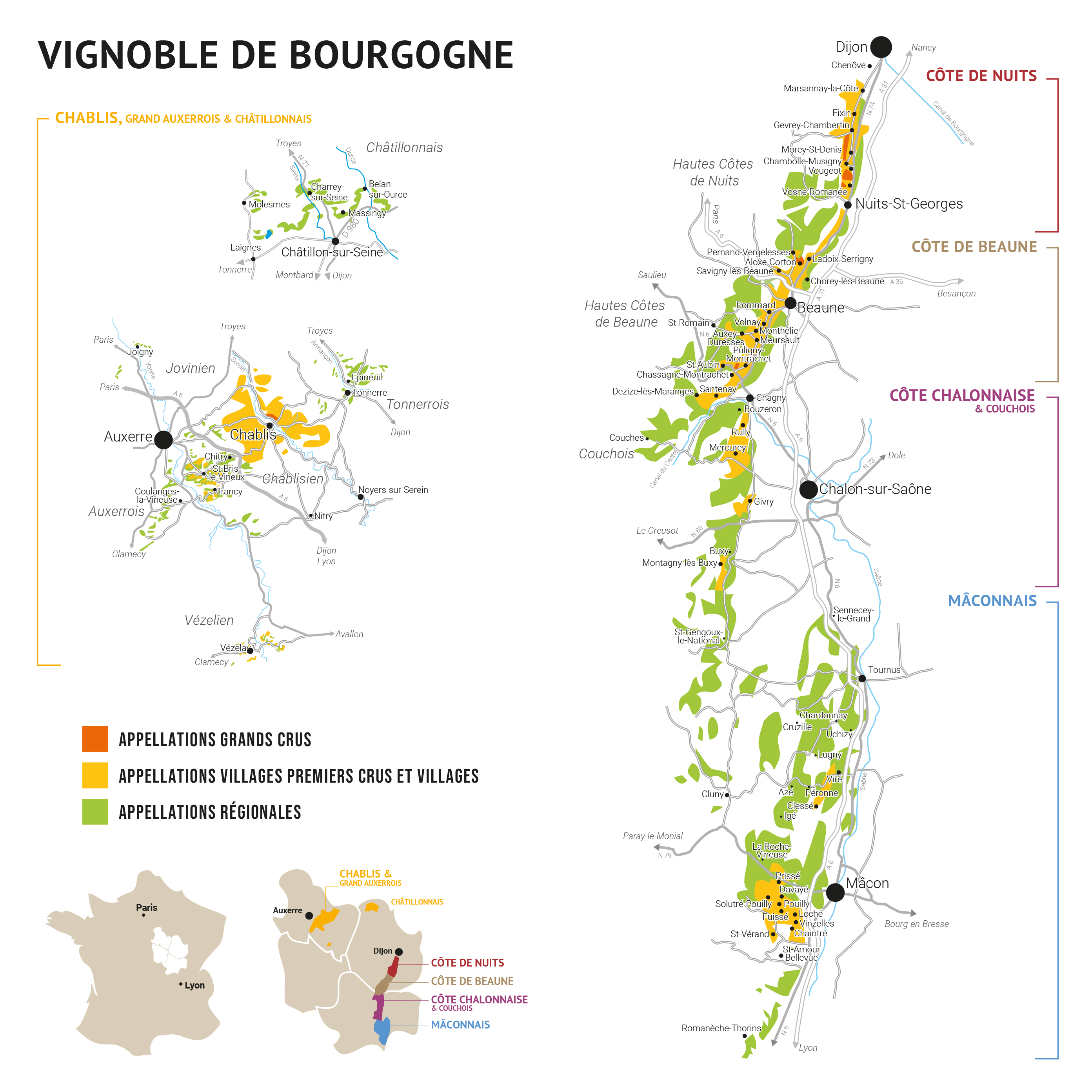
A regional appellation, made principally from Chardonnay grapes, our Coteaux Bourguignons can be produced from vineyards throughout the Greater Burgundy area. It becomes the 101st appellation in Burgundy, created in 2011, with a name that evokes a terroir and an expertise; a wine which allows consumers to gain access to high-quality pure Burgundy wine at a modest price. It offers the wine-lover the joy of discovery, the pleasure of tasting and comparing and the opportunity to learn more about this famous region. As Gaston Roupnel would say, this new Burgundy appellation will succeed "allowing the wine-loving world to drink the health of France!".
Vinification and maturing
Full bunches of grapes are pressed; about 140 kg of grapes are required to produce 100 litres of wine. The must is vinified in temperature-controlled stainless-steel tanks enabling an alcoholic fermentation at about 18°C. As such, we conserve the maximum fruitiness and primary aromas of the Chardonnay grape. Malo-lactic fermentation took place to enable the wine to soften and prepare for bottling.
Vintage : 2025
In the Beaujolais area, the 2025 vintage stands out for its remarkable precocity, in line with great sunny years such as 2015 and 2018.
After a fairly cool winter and a balanced spring, budbreak occurred as early as April 6, followed by a rapid flowering at the end of May, eight days ahead of 2024.
Early summer was marked by contrasts: heavy rainfall in early June, locally accompanied by hail, was followed by a sharp rise in temperatures. A more moderate July preceded a heatwave in August, with peaks above 40°C. (104° F.), leading to significant water stress. These conditions accelerated ripening, enhanced berry concentration and kept disease pressure extremely low.
Harvest began on August 23 for Chardonnay and August 25 for Gamay, extending until September 16 depending on the area. Despite reduced volumes due to hail and drought, quality is definitely there: concentrated, complex wines with deep color and solid tannic structure. A truly nice vintage in the making.