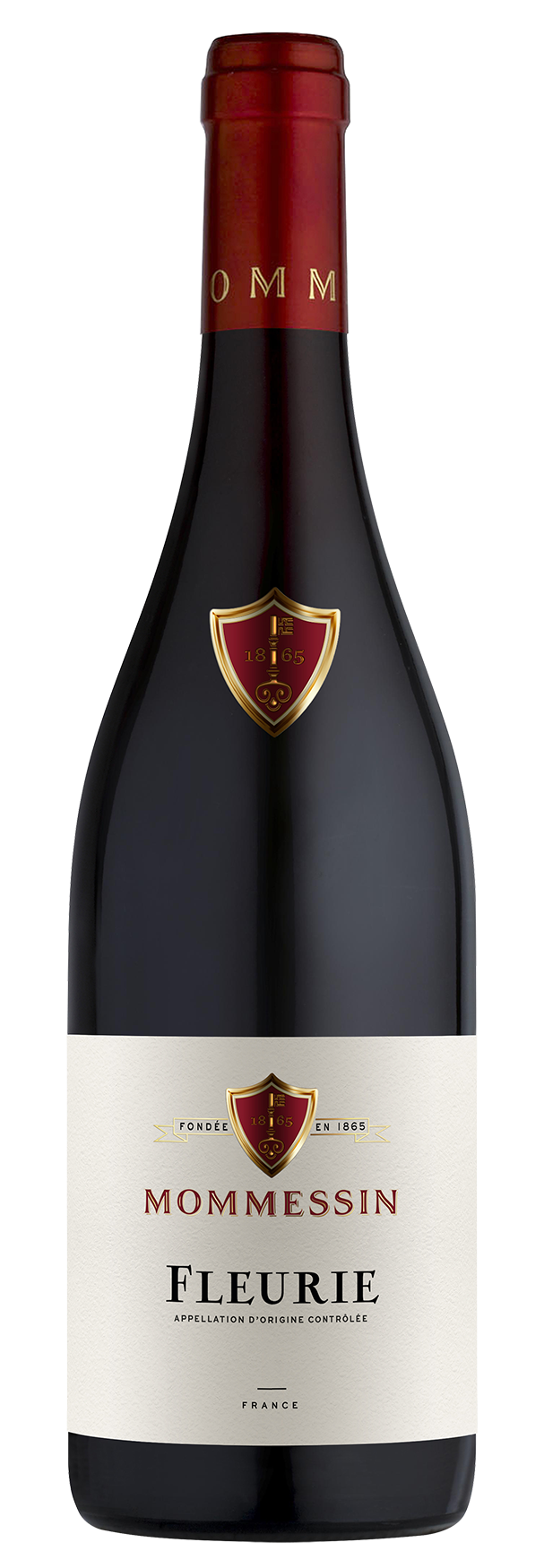
FLEURIE 2024
Grape varietal
Black Gamay (Gamay Noir) with white juice.
Tasting notes
Colour: Deep carmine red with violet highlights.
Nose: Fresh aromas of crushed raspberries accompanied by floral notes of violet and peony.
Palate: An exceptionally fruit-driven wine with remarkable finesse and a silky texture that subtly envelops a generous, rounded structure. It charms with its freshness, excellent body, elegant tannins and long, spicy finish with hints of liquorice.
Serving suggestions
Food and wine pairing
Enjoy with roast leg of lamb, rabbit, poultry, cheeses, or a traditional Fleurie-style andouillette sausage.
Ageing potential
Ready to enjoy now, although it may also be cellared for 3 to 4 years.
Origins
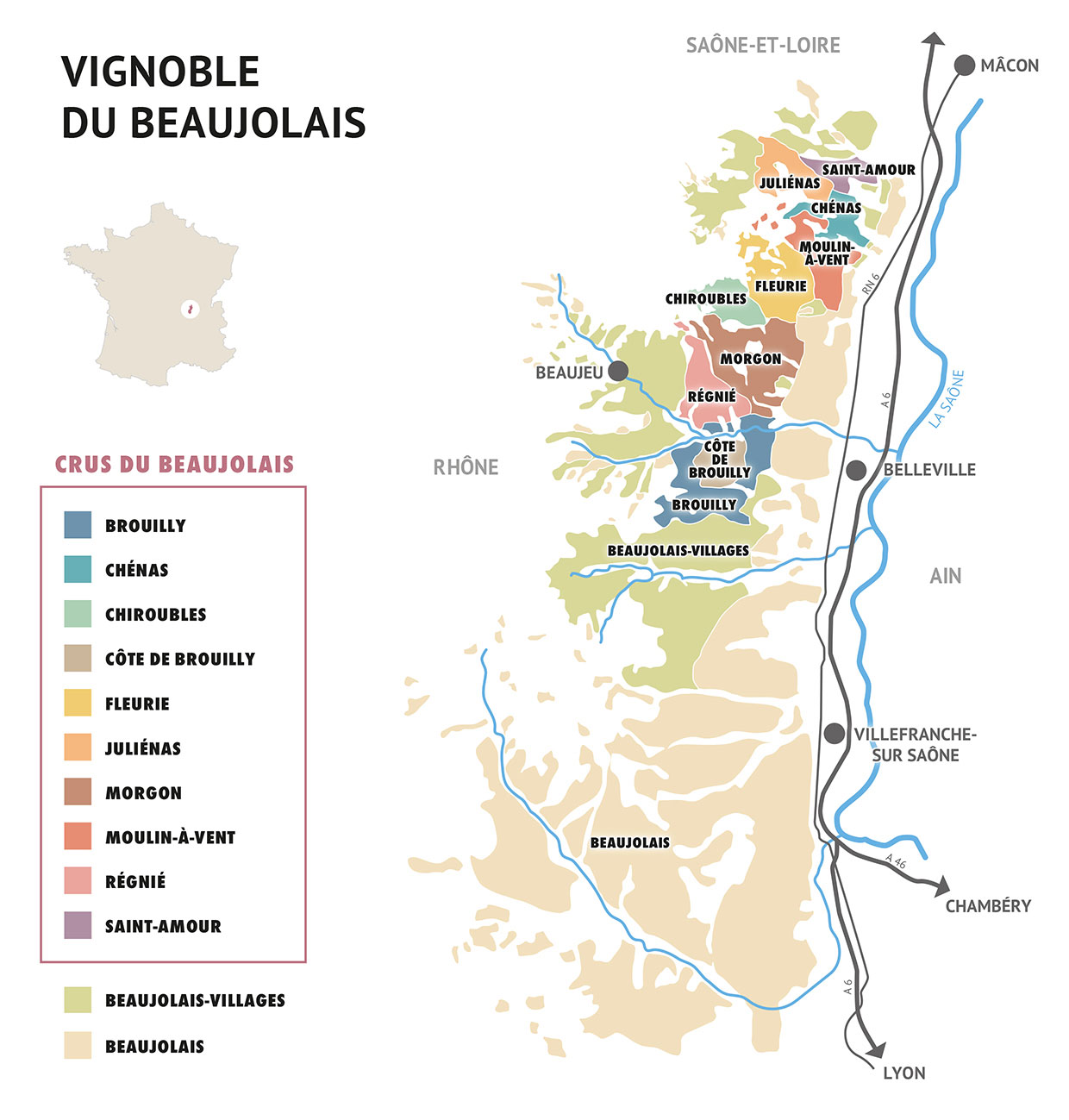
Located in the northern part of Beaujolais, on the granite soils of the hillsides surrounding Fleurie, the Fleurie vineyard is often regarded as producing the most feminine wines of all the Beaujolais crus. The Fleurie appellation is also known as the “Queen of Beaujolais”. According to local tradition, this reputation is attributed to the influence of the Virgin of Fleurie, who watches over the vineyards from the hilltop where her statue stands.
Terroir
The vines grow on pink granite soils containing particles of mica and quartz. This terroir lends the wines their distinctive and highly appealing aromas of red berries and flowers, together with remarkable softness and generosity on the palate.
Vinification and maturing
Traditional Beaujolais whole-bunch vinification is carried out under controlled temperatures (22°C to 28°C). The grapes undergo maceration for 8 to 15 days to extract intense fruit aromas, rich colour and balanced tannins without excessive extraction.
Vintage : 2024
The winter of 2023-2024 was the 3rd warmest since 1900, with a particularly mild February. Spring was marked by heavy rainfall, with a notable lack of sunshine. Despite these conditions, temperatures remained above normal. Summer alternated between hot and cool spells, with hot spells in July. These climatic variations complicated plant health management in the vineyards, but winegrowers were able to keep the situation under control.
Yields for the 2024 harvest are expected to be low and very heterogeneous, with some plots suffering from coulure and millerandage. The first pruning began in early September. Harvesting was spread over three weeks, finishing at the end of September in the latest-ripening areas.
The reds have notes of raspberry, black cherry, pear and floral scents such as lily of the valley. Initial tastings reveal fruity, elegant, supple wines with a ruby colour. The range of aromas is broad, giving an impression of deliciousness on the palate, with a lovely freshness and pleasant complexity.