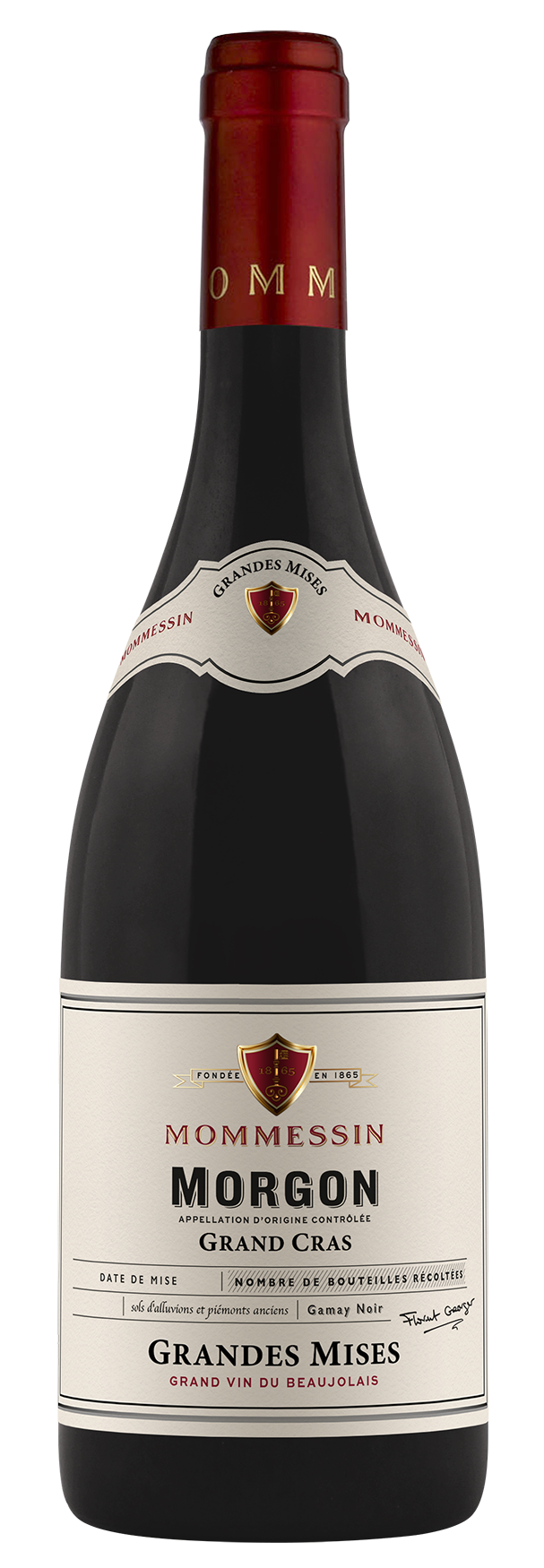
GRANDES MISES
MORGON
GRAND CRAS 2024
Grape varietal
Gamay Noir (with white juice).
Tasting notes
Ruby hue with violet highlights.
The nose reveals black fruit, cherry and delicate spice notes.
Fine and elegant on the palate, with silky tannins, black fruit flavours and a subtle hint of milk caramel.
Serving suggestions
Serve slightly below room temperature, between 15 and 18°C. (60-64°F.).
Try carafing the wine to discover all the richness of this Grand Morgon!
Food and wine pairing
It is the perfect accompaniment for fine food as well as traditional regional dishes.
Ageing potential
Our Morgon - Grand Cras will benefit from a few years in the cellar, and up to 8 – 10 years if the correct temperature and humidity levels are respected.
Origins
Traces of viticulture in Morgon date back to the late 10th century. A legal document dated 956 attests to the sale of a vineyard by the lord of Beaujeu to a vassal.
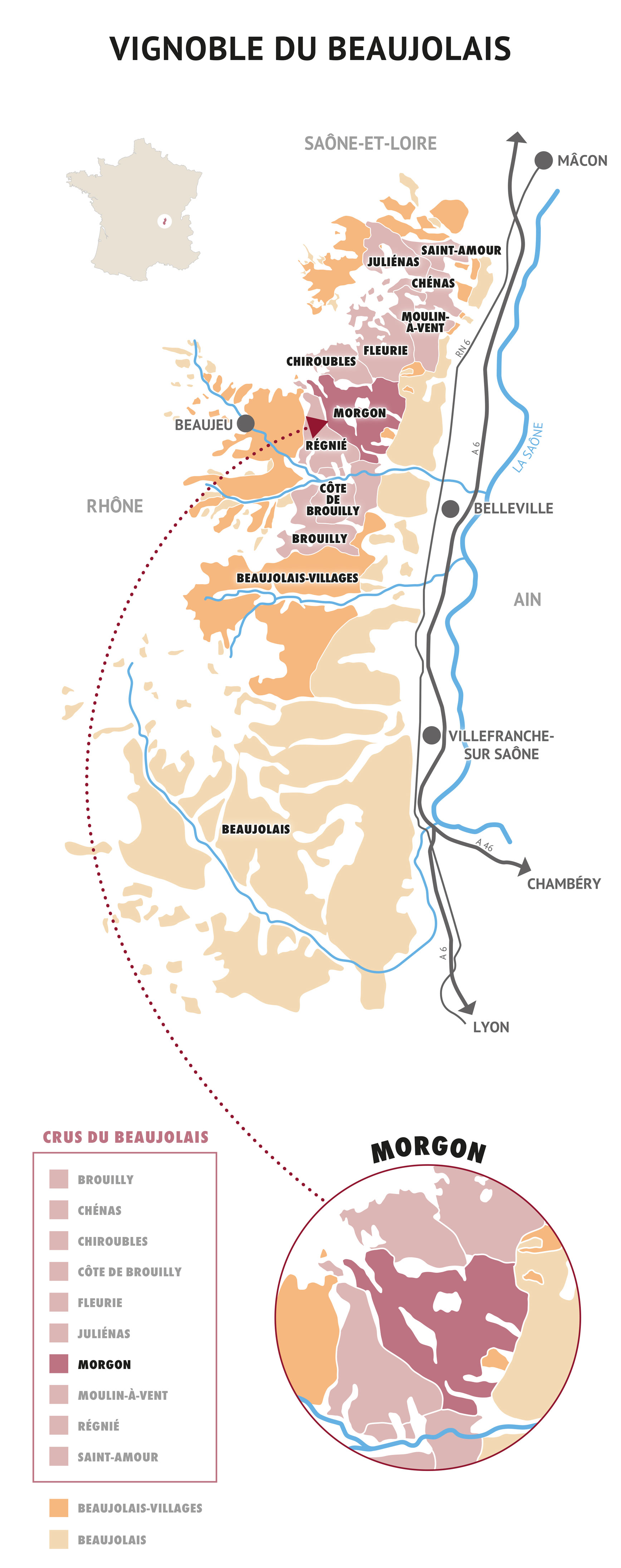
Morgon is one of the ten Beaujolais crus. It is located on the hills to the west of the Saône river, at the heart of the Beaujolais crus, in the northern part of the wine producing region (50 km north of Lyon, 25 km north of Villefranche, 25 km south of Mâcon) that covers a surface area of 1,100 ha.
Terroir
Hailing from a unique terroir made up of decomposed rock and friable schist, Morgon is divided into 6 very distinct growing areas: Les Micouds, Corcelette, Douby, Les Grands Cras, Les Charmes, and the most famous, ‘Côte du Py’.
Les Grands Cras is located at altitudes of between 241 and 263 m. The soil is composed of ancient alluvial-colluvial formations for the most part that overlie granite and highly eroded blue rock. The Grand Cras soil has a 50-60 cm deep top layer containing sand or loamy sand and clay.
Located on a southwest-facing plateau, a third of the area features mica-rich hornfels originating from schist and granitic facies near the edges. These formations are pink and wine coloured and are studded with silvery flakes of mica.
Vine and soil
The vines face south-southwest.
Age of the vines: 55 years old.
Yield: 55 hl / Ha.
The vines are goblet pruned and managed with respect for the environment.
Vinification and maturing
Harvested in mid-September 2024.
Semi-carbonic vinification inspired by traditional Beaujolais methods, with whole clusters gently transferred by gravity into concrete tanks.
Maceration lasts 15 to 18 days, alternating pump-overs and rack-and-return to extract maximum depth, structure and aromatic intensity. Temperatures are maintained between 22 and 25°C.
After pressing, the free-run and press wines from each cuvée are blended and racked for malolactic fermentation on fine lees. The wine is then aged 80% in tank and 20% in French oak barrels (second- to fourth-fill, medium toast) in order to avoid excessive oak influence while bringing the subtle sweetness and roundness needed to enhance the expression of the terroir.
The wine is aged on fine lees for 10 months, both in tank and in barrel.
Vintage : 2024
The winter of 2023-2024 was the 3rd warmest since 1900, with a particularly mild February. Spring was marked by heavy rainfall, with a notable lack of sunshine. Despite these conditions, temperatures remained above normal. Summer alternated between hot and cool spells, with hot spells in July. These climatic variations complicated plant health management in the vineyards, but winegrowers were able to keep the situation under control.
Yields for the 2024 harvest are expected to be low and very heterogeneous, with some plots suffering from coulure and millerandage. The first pruning began in early September. Harvesting was spread over three weeks, finishing at the end of September in the latest-ripening areas.
The reds have notes of raspberry, black cherry, pear and floral scents such as lily of the valley. Initial tastings reveal fruity, elegant, supple wines with a ruby colour. The range of aromas is broad, giving an impression of deliciousness on the palate, with a lovely freshness and pleasant complexity.