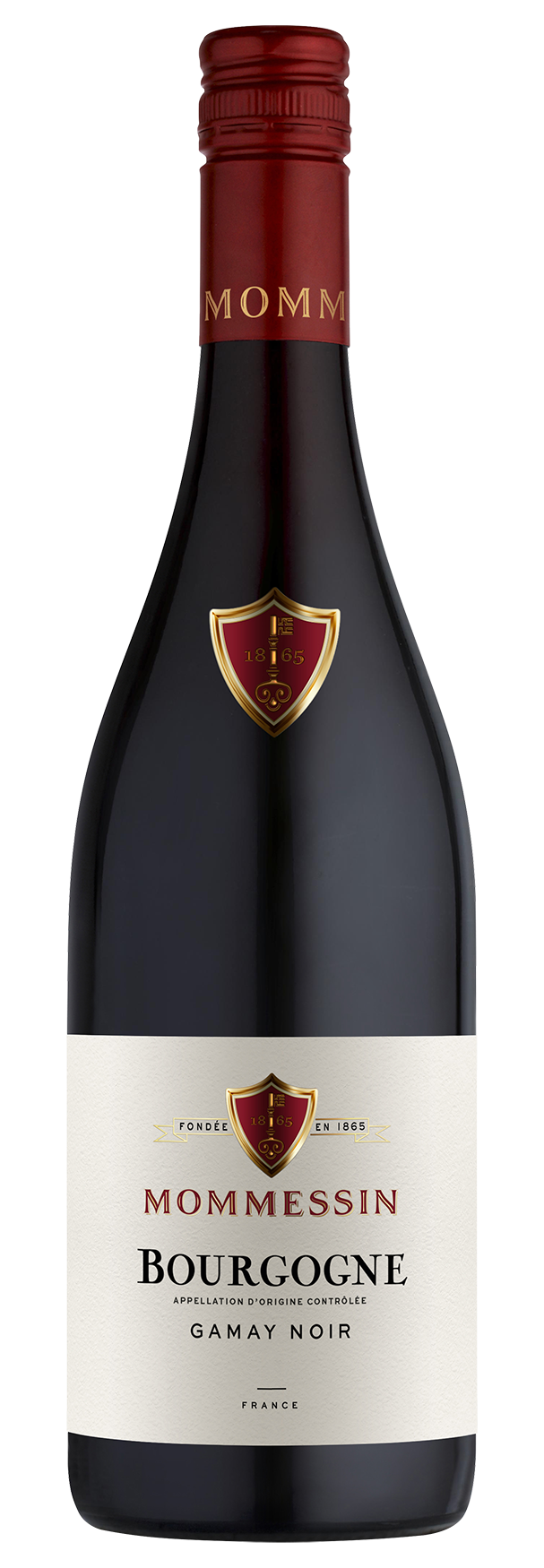
BOURGOGNE
GAMAY NOIR 2024
BOURGOGNE
GAMAY NOIR 2024
Grape varietal
Gamay Noir.
Tasting notes
Bouquet: Intense nose with black and ripe fruits aromas such as burlat cherries, blueberry and blackcurrant, blending perfectly with spicy and roasted notes.
Palate: Fleshy mouth, both fruity and spicy with elegant, mellow tannins and a nice complexity offering a light sensation of sweetness in osmosis with the fruity aromas.
Serving suggestions
Serve at a temperature of around 15-16°C. (59-60°F.).
Food and wine pairing
Will be perfect paired with all type of delicatessen, cold and cured meats, red meat and cheese but also exotic dishes such as couscous, chili con carne, fajitas and tajine.
Ageing potential
Ready to drink now but can also be kept 2 to 3 years.
Origins
Bourgogne Gamay became a new regional appellation from the 2011 vintage.
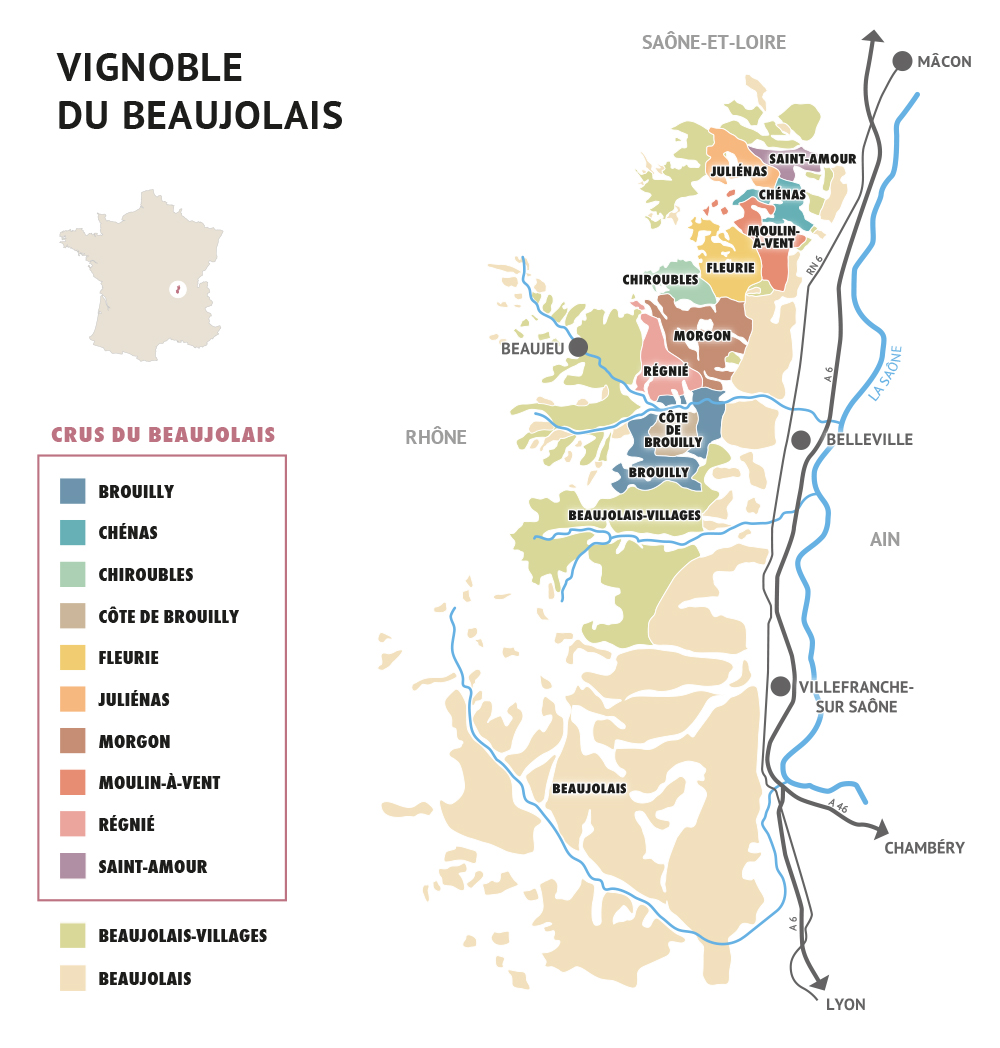
The grapes must come exclusively from the Beaujolais Crus: Brouilly, Chénas, Chiroubles, Côte de Brouilly, Fleurie, Juliénas, Morgon, Moulin à Vent, Régnié and/or Saint Amour. Gamay from the vineyards of the Beaujolais and Beaujolais Villages appellations cannot be used in the case of this new appellation.
Vinification and maturing
Maceration lasted around 15 days under controlled temperature (25-28°C.) with regular cap punching and pumping over. After pressing, the temperatures are lowered in order to preserve the fruit aromas. The wine is then transferred into stainless-steel tanks for a major part to obtain a good balance maximum fruit flavours and the delicate wood brought by the other part of the cuvée which was aged in barrels. Malolactic fermentation was totally completed to bring roundness to the wine.
Vintage : 2024
The winter of 2023-2024 was the 3rd warmest since 1900, with a particularly mild February. Spring was marked by heavy rainfall, with a notable lack of sunshine. Despite these conditions, temperatures remained above normal. Summer alternated between hot and cool spells, with hot spells in July. These climatic variations complicated plant health management in the vineyards, but winegrowers were able to keep the situation under control.
Yields for the 2024 harvest are expected to be low and very heterogeneous, with some plots suffering from coulure and millerandage. The first pruning began in early September. Harvesting was spread over three weeks, finishing at the end of September in the latest-ripening areas.
The reds have notes of raspberry, black cherry, pear and floral scents such as lily of the valley. Initial tastings reveal fruity, elegant, supple wines with a ruby colour. The range of aromas is broad, giving an impression of deliciousness on the palate, with a lovely freshness and pleasant complexity.
The white wines are remarkably fresh and elegant. Their bouquet offers citrus notes, enhanced by subtle floral touches and aromas of pear and peach. The wine is structured by a pronounced minerality, with a lively, unctuous texture.