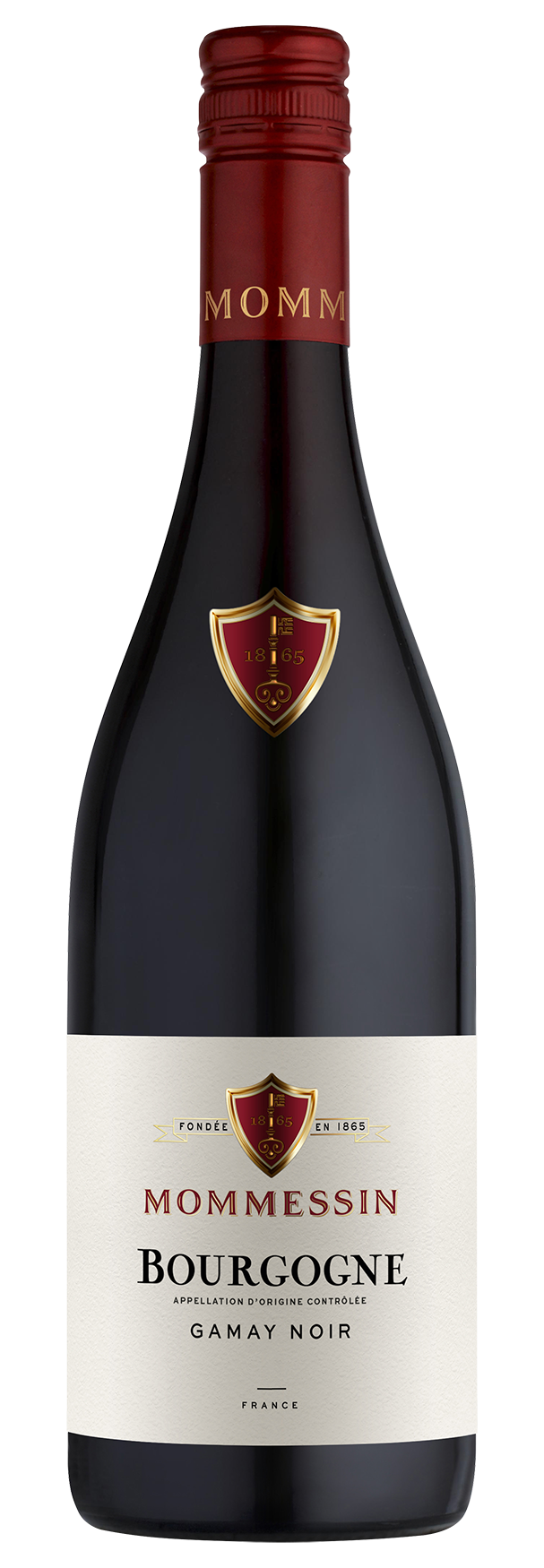
BOURGOGNE
GAMAY NOIR 2025
BOURGOGNE
GAMAY NOIR 2025
Grape varietal
Gamay Noir.
Tasting notes
Bouquet: Intense nose with black and ripe fruits aromas such as burlat cherries, blueberry and blackcurrant, blending perfectly with spicy and roasted notes.
Palate: Fleshy mouth, both fruity and spicy with elegant, mellow tannins and a nice complexity offering a light sensation of sweetness in osmosis with the fruity aromas.
Serving suggestions
Serve at a temperature of around 15-16°C. (59-60°F.).
Food and wine pairing
Will be perfect paired with all type of delicatessen, cold and cured meats, red meat and cheese but also exotic dishes such as couscous, chili con carne, fajitas and tajine.
Ageing potential
Ready to drink now but can also be kept 2 to 3 years.
Origins
Bourgogne Gamay became a new regional appellation from the 2011 vintage.
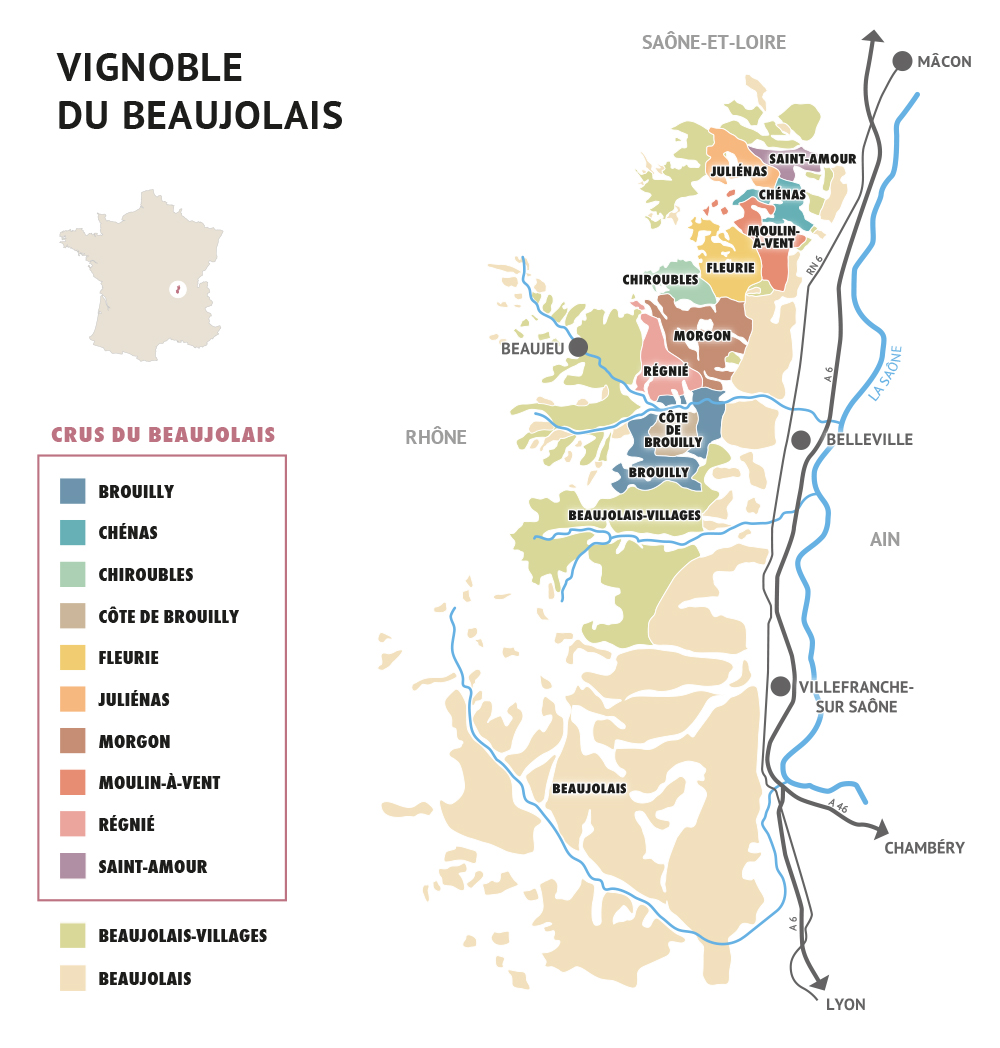
The grapes must come exclusively from the Beaujolais Crus: Brouilly, Chénas, Chiroubles, Côte de Brouilly, Fleurie, Juliénas, Morgon, Moulin à Vent, Régnié and/or Saint Amour. Gamay from the vineyards of the Beaujolais and Beaujolais Villages appellations cannot be used in the case of this new appellation.
Vinification and maturing
Maceration lasted around 15 days under controlled temperature (25-28°C.) with regular cap punching and pumping over. After pressing, the temperatures are lowered in order to preserve the fruit aromas. The wine is then transferred into stainless-steel tanks for a major part to obtain a good balance maximum fruit flavours and the delicate wood brought by the other part of the cuvée which was aged in barrels. Malolactic fermentation was totally completed to bring roundness to the wine.
Vintage : 2025
In the Beaujolais area, the 2025 vintage stands out for its remarkable precocity, in line with great sunny years such as 2015 and 2018. After a fairly cool winter and a balanced spring, budbreak occurred as early as April 6, followed by a rapid flowering at the end of May, eight days ahead of 2024. Early summer was marked by contrasts: heavy rainfall in early June, locally accompanied by hail, was followed by a sharp rise in temperatures. A more moderate July preceded a heatwave in August, with peaks above 40°C. (104° F.), leading to significant water stress. These conditions accelerated ripening, enhanced berry concentration and kept disease pressure extremely low. Harvest began on August 23 for Chardonnay and August 25 for Gamay, extending until September 16 depending on the area. Despite reduced volumes due to hail and drought, quality is definitely there: concentrated, complex wines with deep color and solid tannic structure. A truly nice vintage in the making.